
Table of Contents
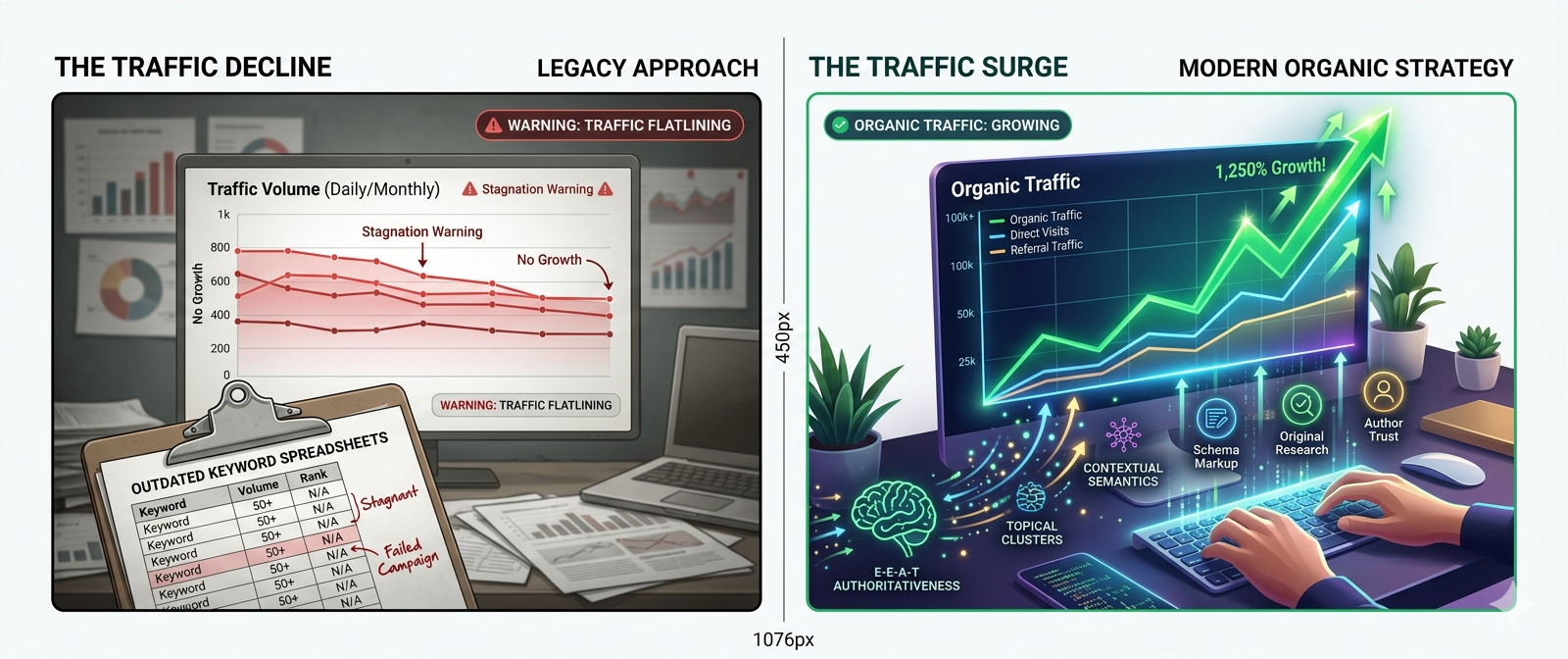
Boost Website Traffic? It shows up right when you check. A deep dive into data often brings that moment of dread. Carefully written posts land online without a ripple. Staring at live stats, waiting – nothing moves. Numbers just sit there.
Years went by where the playbook stayed fixed. Hit a popular search term, draft a page fast, gather some links pointing in, then wait for visits to roll in. Now everything shifted sideways. Search answers appear without clicks. Artificial intelligence serves summaries before you even click. People hardly stay focused on one thing long. Getting real eyes to your site means scrapping old methods entirely.
Start strong by ditching shallow numbers. Real growth hides beyond what algorithms reward – dig into deep expertise on one clear topic. Structure every piece so machines can grab meaning fast. Shape a presence people seek out, word for word, without guessing. Length stays fixed, focus sharp.
The Strategic Shift: Why Traditional Traffic Playbooks are Failing
Before exploring the technical execution, we have to diagnose why old-school optimization strategies no longer yield results.
| THE ATTENTION REVOLUTION IN SEARCH | ||
|---|---|---|
|
THE OLD REVENUE MODEL |
THE MODERN ORGANIC SYSTEM |
|
|
– High Volume Informational Blog |
– Hyper-Targeted Clusters |
|
|
– Superficial Keyword Stacking |
– Zero-Click Answer Blocks |
|
|
– Passive Organic Skimmers |
– High-Intent Brand Seekers |
|
Back in the day, companies chased broad search terms to get noticed by lots of people. Now though, answers to simple questions show up right on the search results screen. Getting found means offering more than what’s already given away free. Relying on visits from basic queries leaves little room when users never leave the search engine. A shift happens quietly – what once brought clicks now brings competition. (Boost Website Traffic)
Start here instead of ending there. When machines stop explaining, your words should begin. Not every question fits a pattern – some demand lived experience. Real answers come from knowing, not guessing. Pages built on shallow repetition fall short. Depth arrives when someone sees beyond data points. Queries layered with context wait for voices that reflect, adjust, twist thought. Your role? Offer what algorithms cannot mimic: judgment shaped by time, trial, missteps. Let clarity rise slowly through example, contrast, detail only presence can shape.
4 Core Pillars to Maximize Organic Page Views Globally
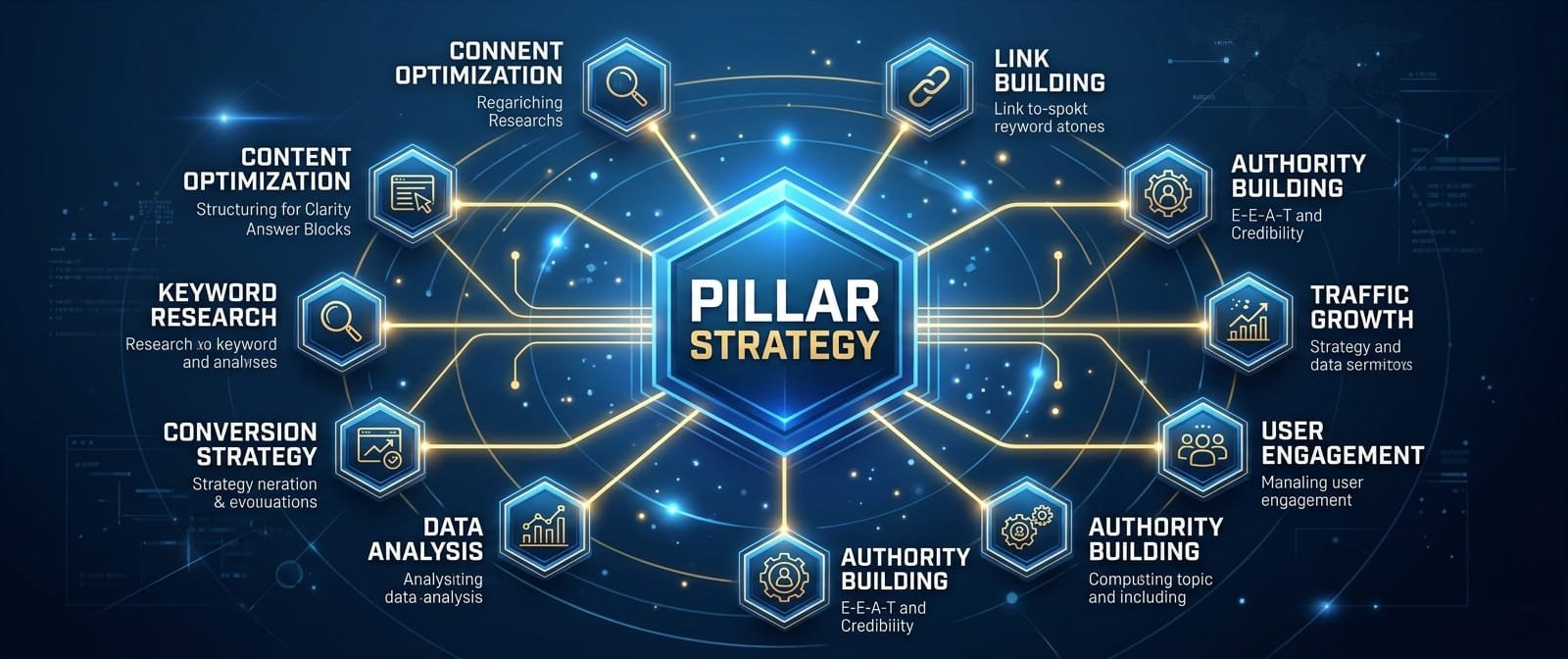
If you want to bypass the noise and reliably attract a steady stream of target users, your team needs to implement these four foundational pillars into your weekly workflow.
1. Build Total Topical Authority via Semantic Clusters
These days, search engines treat sites like webs of knowledge instead of just separate pages. To stand a chance at ranking for tough keywords, one lone article won’t cut it.
Start with one main page covering a broad industry theme. From there, spread out into many narrow subtopic pieces. Each tiny article connects backward to the central guide through clear, precise linking words. Search engines notice this setup. It shows them you cover the field thoroughly. The links act like signs pointing back to a single source of detail. Over time, they understand your site knows the subject well.
2. Capture Real Estate with Extractable "Answer Blocks"
One way some companies win now? They shape text so machines grasp it fast. Even though fewer people click links today, smart formatting opens doors once invisible. Getting into top spots on results pages means helping bots break down your words easily.
Start by putting the core idea right up front, not hidden behind long lead-ins. Right after each H2 or H3 heading, drop a clear, strong summary – around 40 words – that answers the question straight. Then bring in custom visuals, explanations, or step-by-step details to back it up. Structure pulls readers in when they get the payoff first, context later. What matters shows up before what explains it. Clarity wins when the conclusion isn’t buried. Put truth before buildup, always. (Boost Website Traffic)
3. Inject Proprietary Data and First-Hand E-E-A-T
Out there online, most content just echoes what’s already been said. Search engines learn from pages they can access – so when a website repeats common knowledge, it vanishes into the noise.
Every piece of content needs a voice only a real person can give. What matters most? It comes down to lived experience, deep knowledge, clear authority, and genuine trust. That mix – experience, expertise, authoritativeness, trust – is what sets some work apart online. Nothing else drives organic reach like it.
- Publish original surveys: Start by running your own polls inside the company. Use findings that reflect only your operations instead of generic stats. Build insights nobody else can copy because they come straight from your team.
- Incorporate expert perspectives: Start by talking to those who know the work best – ask questions of company engineers or respected voices outside the organization. Pull real answers straight from their words instead of summarizing ideas. Give credit clearly each time a thought comes from someone else. Let their voice stand without rephrasing too much. Hearing it directly adds weight.
- Provide real world proof: Start with what actually happened. Show inside images from your own files – ones that prove things work. Pull examples straight from past projects where results were clear. Share exact figures on earnings or growth, nothing rounded up. Let the data speak without filters.
4. Optimize Content Assets Across Multiple Search Mediums
Out there, people find companies in more ways than just typing into a browser. Videos pull attention now, not only old-school searches. Picture scrolls on social apps lead users straight to new names they trust. Workers spot businesses through work-related chats online. Forums spark interest when real talk includes brand experiences. (Boost Website Traffic)
One way to grow online visibility today? Try spreading content across several different formats. Turn popular written pieces into quick videos, sometimes even animated ones. Slide shows packed with visuals work well on professional networks. Break ideas into chunks that fit forum conversations naturally. Each version points people toward the original source. Different platforms prefer different shapes – match them. Discovery happens more often when material feels at home everywhere.
Traditional Content Tactics vs. High-Conversion Traffic Optimization
To understand how to shift your execution from basic keyword matching to advanced audience acquisition, evaluate this comparative breakdown:
| Growth Lever | Legacy Content Playbook | Modern Traffic Architecture |
|---|---|---|
|
Primary Metric |
Raw Impressions & Keyword Ranks |
Qualified Conversions & Content Citations |
|
Formatting Style |
Linear prose with high keyword density |
Modular data layouts with scannable headings |
|
Data Authenticity |
Curated summaries from top Google hits |
First-party research, case studies, and quote assets |
|
Distribution Focus |
Publish once and wait for indexing crawlers |
Omni-channel content repurposing and syndication |
|
Internal Linking |
Random cross-linking across blog posts |
Strict, highly organized topical semantic clustering |
Step-by-Step Execution Plan to Elevate Online Search Visibility
Ready to implement this framework? Follow this operational checklist on your high-priority content assets this week to begin accelerating your growth:
Step 1: Conduct a High-Intent Content Audit
Start by checking which pages land between spots eleven and twenty in search rankings. Pages here have solid foundations yet need tweaks to climb higher. Try sharpening headlines first – small shifts often help. Swap old numbers with current data so facts stay reliable. Build short, clear responses into the flow where questions appear naturally. Little changes like these can spark better positioning without rebuilding everything.
Step 2: Transition from Plain Text to Structured Layouts
Take your biggest written pieces. Split up thick blocks of text without holding back. Turn each set of facts into a table using markdown. Lay out how-to sequences as step-by-step numbers. Clear structure like that helps machines quickly grab, mark, and show what you wrote.
Step 3: Implement Extensive Entity Schema Markup
Start with clean JSON-LD markup woven into your pages – focus on Article, FAQPage, then Product types. That structure speaks straight to search bots, cutting through noise like a bridge from your backend to their indexing flow. It spells out who wrote what, how things connect, while skipping guesswork. Clarity comes fast when machines grasp meaning at first scan.
The Reality Check: Winning at organic reach means skipping quick fixes that fade fast. Instead, it shows up when companies grow a clear collection of useful materials – something people actively look for, rely on. Real staying power lives there.