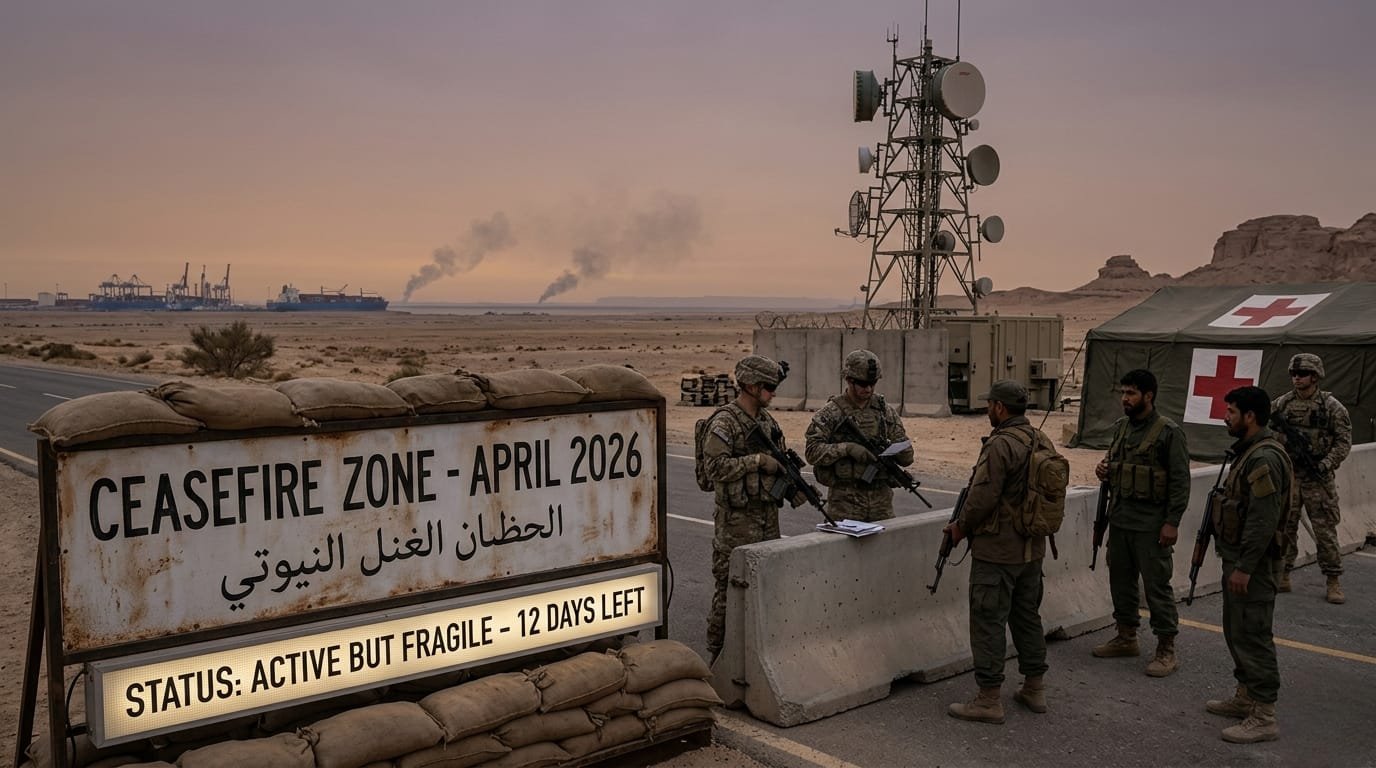
The April Brink: A Fragile Peace and the Shadow of Total War
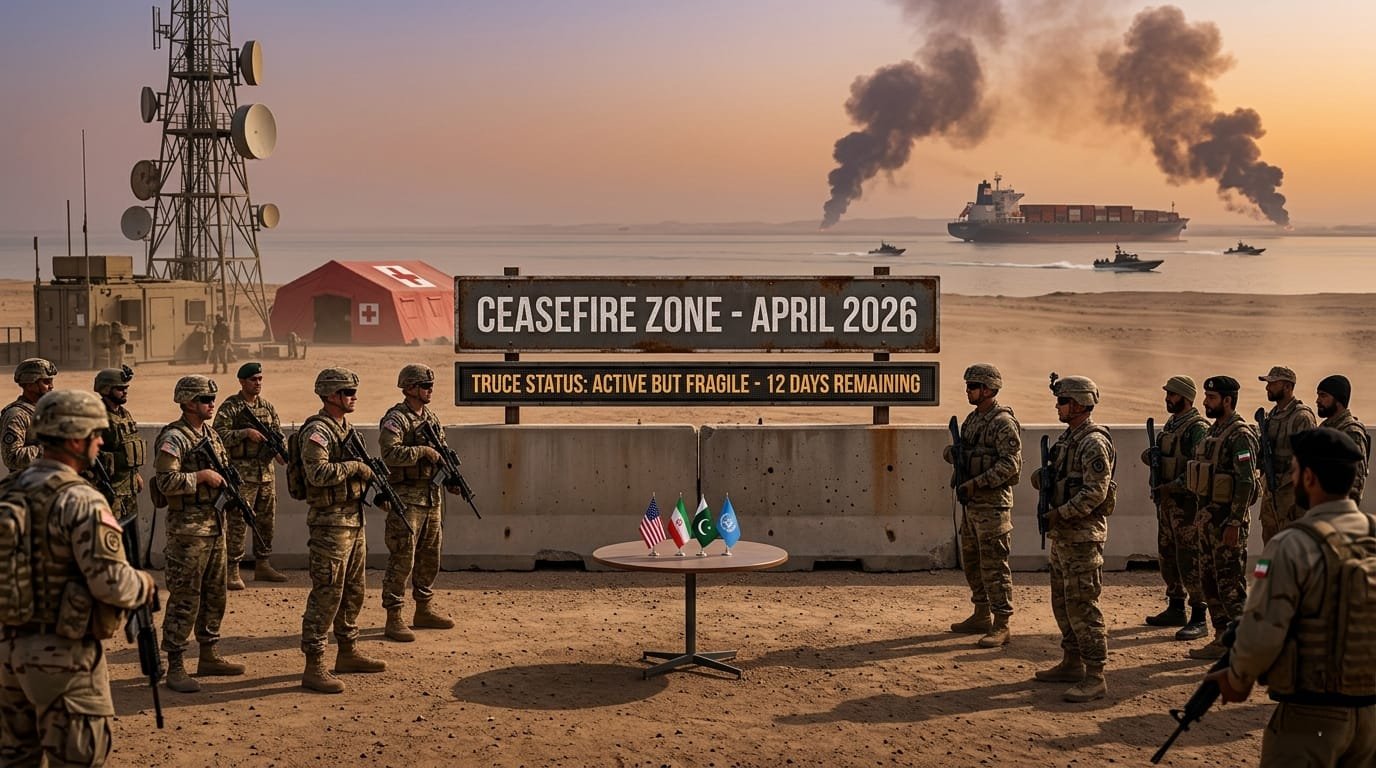
The geopolitical landscape in April 2026 is dominated by a fragile, high-stakes diplomatic gamble in the Middle East and a persistent stalemate in Eastern Europe. While 2026 has brought the first real glimmers of “peace” in years, these ceasefires are currently being tested by fire and ambiguity.
Here is the full breakdown of the ceasefire status across the globe’s major conflict zones as of April 9, 2026.
1. The Iran-U.S. Ceasefire (The "Pakistan Accords")
The biggest headline of 2026 is the two-week temporary ceasefire between the United States and Iran, mediated by Pakistan. Announced on April 7–8, this deal aims to pull the world back from the brink of a massive regional war.
Key Components of the Agreement:
- Strait of Hormuz: Iran has agreed to reopen this vital shipping lane, which had been effectively closed, causing global oil prices to skyrocket.
- Nuclear Constraints: Iran has reportedly indicated a willingness to turn over its stocks of enriched uranium.
- Negotiation Window: A 15–20 day “cooling-off” period to begin formal peace talks in Islamabad.
The Critical "Lebanon Loophole"
Despite the truce, the situation is precarious. On April 8, Israel launched “Operation Eternal Darkness,” a massive wave of airstrikes against Hezbollah targets in Lebanon.
- The Dispute: Pakistan and Iran claim the ceasefire covers “all fronts,” including Lebanon.
- The Reality: The U.S. and Israel maintain that Lebanon was not part of the agreement.
- The Fallout: As of today, April 9, strikes in Beirut and southern Lebanon continue, and Iran has threatened to re-close the Strait of Hormuz if the bombardment doesn’t stop.
2. Russia-Ukraine: The Easter Truce Offer
In Eastern Europe, the war has reached its 1,500th day. While no permanent ceasefire is in sight, there is a push for a humanitarian pause.
- Zelenskyy’s Proposal: President Volodymyr Zelenskyy has offered a mutual ceasefire on energy infrastructure strikes. He also proposed a temporary truce for Orthodox Easter (April 12–13, 2026).
- The Russian Stance: The Kremlin has largely rejected these offers. Strikes on Ukrainian ports like Odesa continue, and Russian forces are currently conducting offensive operations in the Kupiansk direction.
- Outlook: A ceasefire remains unlikely here, as both sides appear dug in for a long-term war of attrition heading into the September 2026 Russian elections.
3. Gaza: The "Failing" Peace
While a ceasefire was technically agreed upon for Gaza six months ago, humanitarian organizations report that it is failing on the ground.
“Palestinians are continuing to suffer extreme deprivation and hunger due to aid obstructions. The ceasefire exists on paper, but the humanitarian reality has not improved.” — Summary from April 9 Global NGO Report.
| Conflict | Ceasefire Status | Primary Mediator | Major Obstacle |
|---|---|---|---|
|
U.S. vs. Iran |
Active (Temporary) |
Pakistan |
Continued strikes in Lebanon |
|
Israel vs. Hezbollah |
None |
— |
Israel views this as a separate front |
|
Russia vs. Ukraine |
Rejected |
U.S. / Turkey |
Kremlin refusal of “Easter Truce” |
|
Israel vs. Hamas |
Fragile/Failing |
Qatar / Egypt |
Aid access and movement restrictions |
The Bottom Line
April 2026 is a month of “armed diplomacy.” The world is currently holding its breath to see if the U.S.-Iran truce can survive the ongoing violence in Lebanon. If it holds, we may see oil prices stabilize; if it fails, the “2026 Iran War” could expand into a full-scale regional conflagration.